Three Easy Banchan for Beginners (Kongnamul, Sigeumchi, Eggs)
- Prep
15 minutes - Cook
25 minutes - Serves
3-4 servings - Difficulty
easy
Ingredients
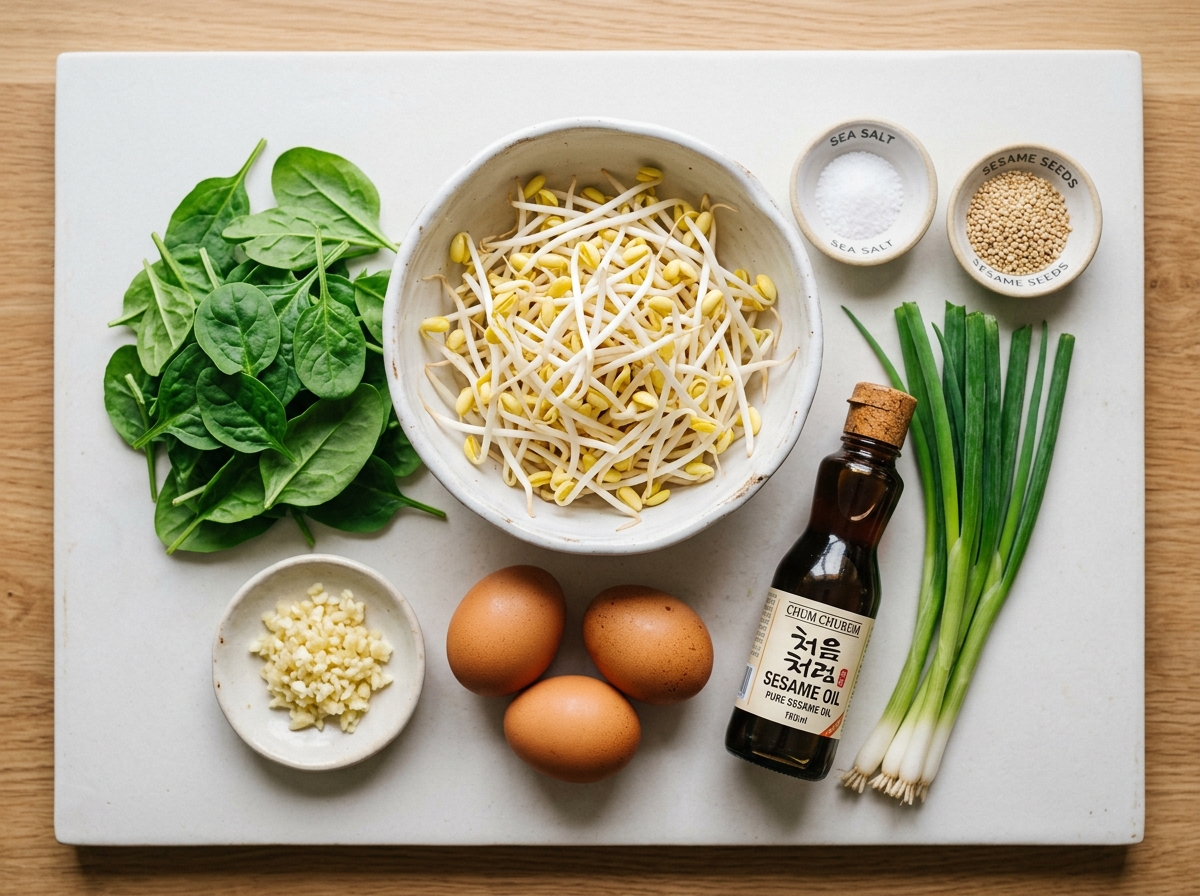
- 300g (about 5 cups) fresh soybean sprouts (kongnamul)
- 300g (about 1 large bunch) fresh spinach
- 4 large eggs
- 3 cloves garlic, minced
- 3 tablespoons sesame oil, divided
- 2 tablespoons toasted sesame seeds, divided
- Salt to taste
- 2 green onions, finely chopped (divided between dishes)
- 1 tablespoon vegetable oil (for egg roll)
- Optional: 1 small carrot, julienned for egg roll
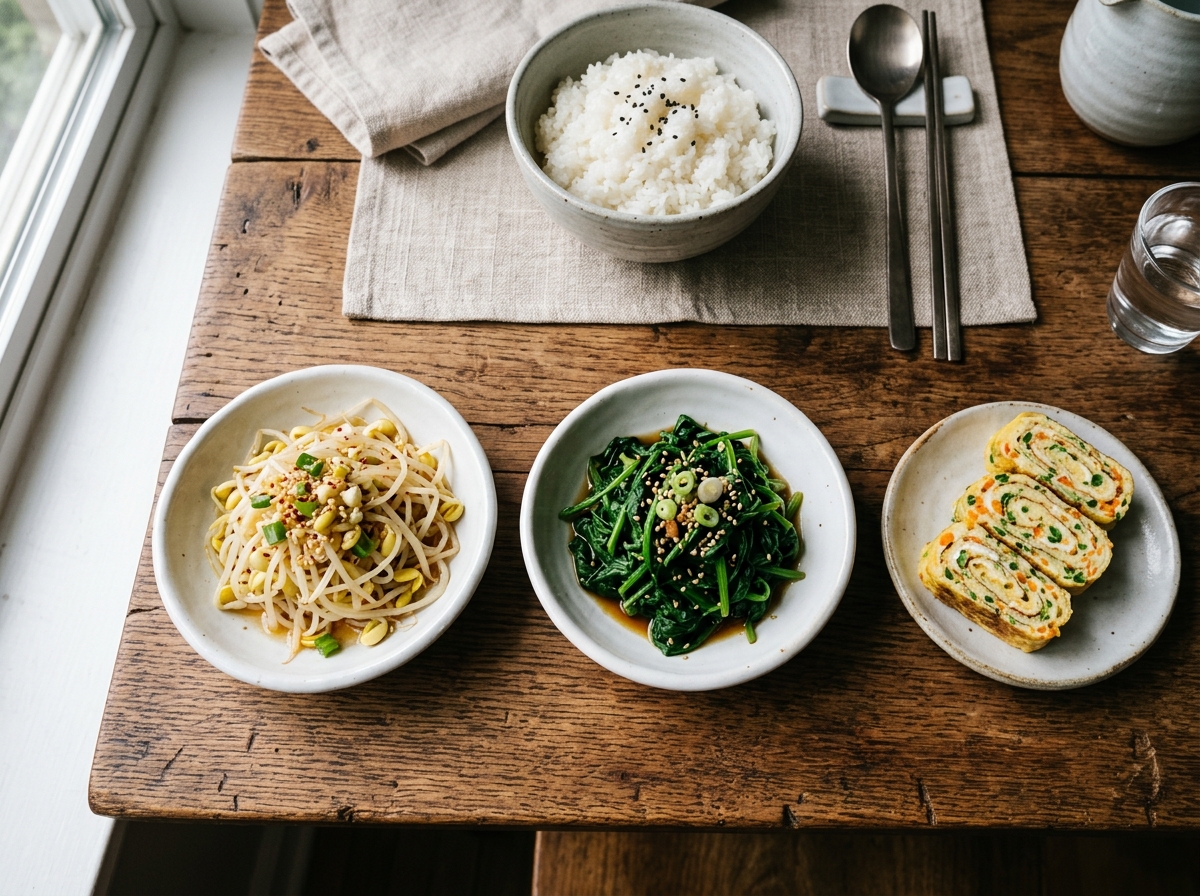
Banchan (반찬) are the small side dishes that turn a bowl of rice into a real Korean meal. They’re not afterthoughts—they’re the heart of home cooking, offering different flavors, textures, and colors on one table. Learning to make a few simple banchan at once is how Korean home cooks actually prepare meals, not one dish at a time. These three—seasoned bean sprouts (kongnamul muchim), spinach (sigeumchi namul), and egg rolls (gyeran mari)—come together quickly, store well, and give you a complete, satisfying spread with rice and soup.
Prepare the Bean Sprouts (Kongnamul Muchim)
Start with the bean sprouts because they need to cool after cooking. Rinse the soybean sprouts briefly under cold water—don’t over-wash or they’ll get waterlogged. Place them in a pot with a lid, add 1/2 cup water and a pinch of salt, then cover tightly. Bring to a boil over high heat, then reduce to medium and steam for 5-6 minutes. You want them tender but still with a slight crunch—mushy sprouts are a common mistake. Drain immediately in a colander and let them cool while you work on the other dishes. The residual heat will finish cooking them gently.
Once cooled (they should be just warm or room temperature), transfer to a bowl. Add 1 tablespoon sesame oil, 1 clove minced garlic, 1/2 tablespoon sesame seeds, a third of the chopped green onion, and salt to taste (start with 1/4 teaspoon). Toss gently with your hands—this distributes the seasoning better than a spoon. Taste and adjust salt. The flavor should be nutty, garlicky, and clean.
Cook the Spinach (Sigeumchi Namul)
Bring a large pot of water to a rolling boil and add a generous pinch of salt. Meanwhile, trim any tough stem ends from the spinach but keep the tender stems—they add texture. Blanch the spinach for 30-40 seconds until wilted and bright green, then immediately drain and rinse under cold running water to stop the cooking and preserve the color. This shock keeps the spinach from turning olive-drab.
Squeeze the spinach firmly in your hands to remove as much water as possible—this is crucial. If it’s too wet, the seasoning will slide off and pool at the bottom. Roughly chop the bundle into 2-inch lengths. In a bowl, mix the spinach with 1 tablespoon sesame oil, 1 clove minced garlic, 1/2 tablespoon sesame seeds, half the remaining green onion, and salt to taste (about 1/4 teaspoon). Toss well. The spinach should glisten but not swim in oil.
Make the Egg Roll (Gyeran Mari)
Beat the eggs in a bowl with a pinch of salt until well combined but not foamy. If using carrot, stir it in now along with the remaining green onion—this adds color and a little crunch, but it’s optional. Heat a nonstick or well-seasoned pan (a square tamagoyaki pan is ideal, but any small nonstick skillet works) over medium-low heat. Add the vegetable oil and swirl to coat.
Pour in about a third of the egg mixture, tilting the pan so it spreads thinly and evenly. Once the bottom is just set but the top is still a bit wet (after about 1 minute), use a spatula to roll the egg layer tightly from one side to the other, like a cigar. Push the rolled egg to one edge of the pan. Add another third of the egg mixture, letting it flow under the existing roll to bind them together. When set, roll again, incorporating the first roll. Repeat with the final third. The finished roll should be golden, tight, and layered. Slide it out onto a cutting board, let it cool for a minute, then slice into 1/2-inch rounds. The cross-section should show pretty spirals.
💡 Tip: If your egg roll breaks or looks messy, don’t worry—it’ll still taste great. The key is keeping the heat low enough that the egg sets gently without browning too fast.
Serving and Storage
Arrange your three banchan in small individual dishes alongside a bowl of steamed rice, and if you have it, a simple soup like miyeok guk or doenjang jjigae. This is how a basic Korean home meal comes together: several small flavors on one table, each bite a little different. These banchan keep well in the fridge for 3-4 days in airtight containers, so you can make them ahead and pull them out as needed throughout the week—exactly how Korean families do it.
Substitutions: If you can’t find fresh soybean sprouts, mung bean sprouts work but cook faster (about 3 minutes). Regular spinach is fine; avoid baby spinach, which turns to mush. For the egg roll, add finely diced bell pepper, zucchini, or even a little chopped kimchi for variety. No sesame oil? It’s harder to substitute authentically, but a neutral oil plus a few drops of toasted sesame seeds crushed in your palm will give you some of that nutty aroma.