Naengmyeon (Korean Cold Noodles) – Refreshing Summer Dish
- Prep
25 minutes - Cook
1 hour 15 minutes - Serves
4 servings - Difficulty
medium
Ingredients
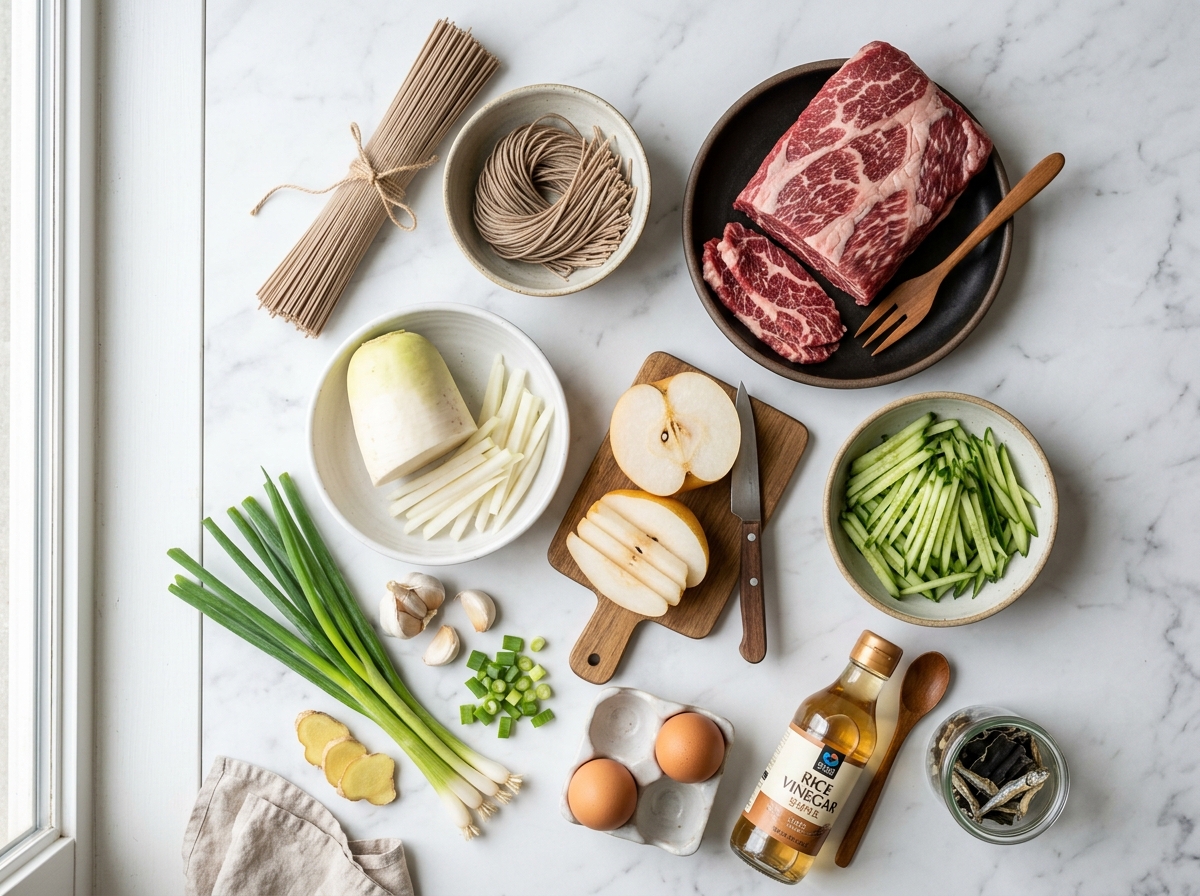
- 300g naengmyeon noodles (buckwheat cold noodles, or substitute with soba)
- 400g beef brisket
- 200g Korean radish (mu), or daikon
- 6 cups water
- 4 cloves garlic, crushed
- 2 green onions, cut into thirds
- 1 tablespoon salt
- 2 tablespoons rice vinegar
- 1 tablespoon sugar
- 1 teaspoon salt (for seasoning broth)
- 2 teaspoons soy sauce
- 1 Korean pear or Asian pear, thinly sliced
- 1/2 cucumber, julienned
- 2 hard-boiled eggs, halved
- 2 teaspoons Korean mustard paste (gyeoja), or Dijon mustard
- Ice cubes
- Toasted sesame seeds (optional)
Naengmyeon is one of Korea’s most refreshing summer dishes—a bowl of chewy buckwheat noodles served in an ice-cold broth that’s both savory and slightly tangy. While many Koreans eat this year-round (especially after Korean BBQ), it truly shines on sweltering summer days when you need something cooling and satisfying. The key to great naengmyeon at home is a clean, flavorful broth, and this simplified method gets you there without the marathon cooking sessions of traditional recipes.
Make the Broth
The foundation of good naengmyeon is a light but deeply savory broth. In a large pot, combine the beef brisket, radish (cut into large chunks), water, crushed garlic, green onions, and 1 tablespoon salt. Bring to a boil over high heat, then immediately reduce to a gentle simmer. Skim off any foam and impurities that rise to the surface in the first 10 minutes—this keeps your broth crystal-clear.
Simmer uncovered for about 1 hour until the beef is tender and the broth tastes rich. You’re looking for a clean, beefy flavor without heaviness. Remove the beef and radish, and strain the broth through a fine-mesh sieve into a clean container.
💡 Tip: Traditional naengmyeon broth is chilled overnight, which allows fat to solidify on top for easy removal and deepens the flavor. If you have time, make the broth a day ahead.
Season the strained broth with rice vinegar, sugar, 1 teaspoon salt, and soy sauce. Taste and adjust—the broth should be tangy, slightly sweet, and well-salted because the ice will dilute it. Refrigerate until completely cold, at least 2-3 hours. If you’re in a hurry, place the container in an ice bath and stir occasionally.
Cook the Noodles
Naengmyeon noodles (typically a mix of buckwheat and potato or sweet potato starch) have a unique chewy, springy texture that’s central to the dish. Bring a large pot of water to a rolling boil. Add the noodles and cook for 4-5 minutes, stirring occasionally to prevent clumping. Unlike pasta, these noodles need to be rinsed thoroughly after cooking.
Drain the noodles and immediately rinse under cold running water for 1-2 minutes, rubbing them gently with your hands to remove excess starch and cool them down completely. This step is non-negotiable—it gives the noodles their characteristic slippery, bouncy texture and prevents the broth from getting cloudy. Drain well and set aside.
Prepare the Garnishes
Slice the Korean pear into thin matchsticks or half-moons—the sweetness and crunch are essential counterpoints to the tangy broth. Julienne the cucumber into thin strips. Halve your hard-boiled eggs. Slice the cooked beef brisket thinly against the grain (you can serve it cold or at room temperature).
Assemble and Serve
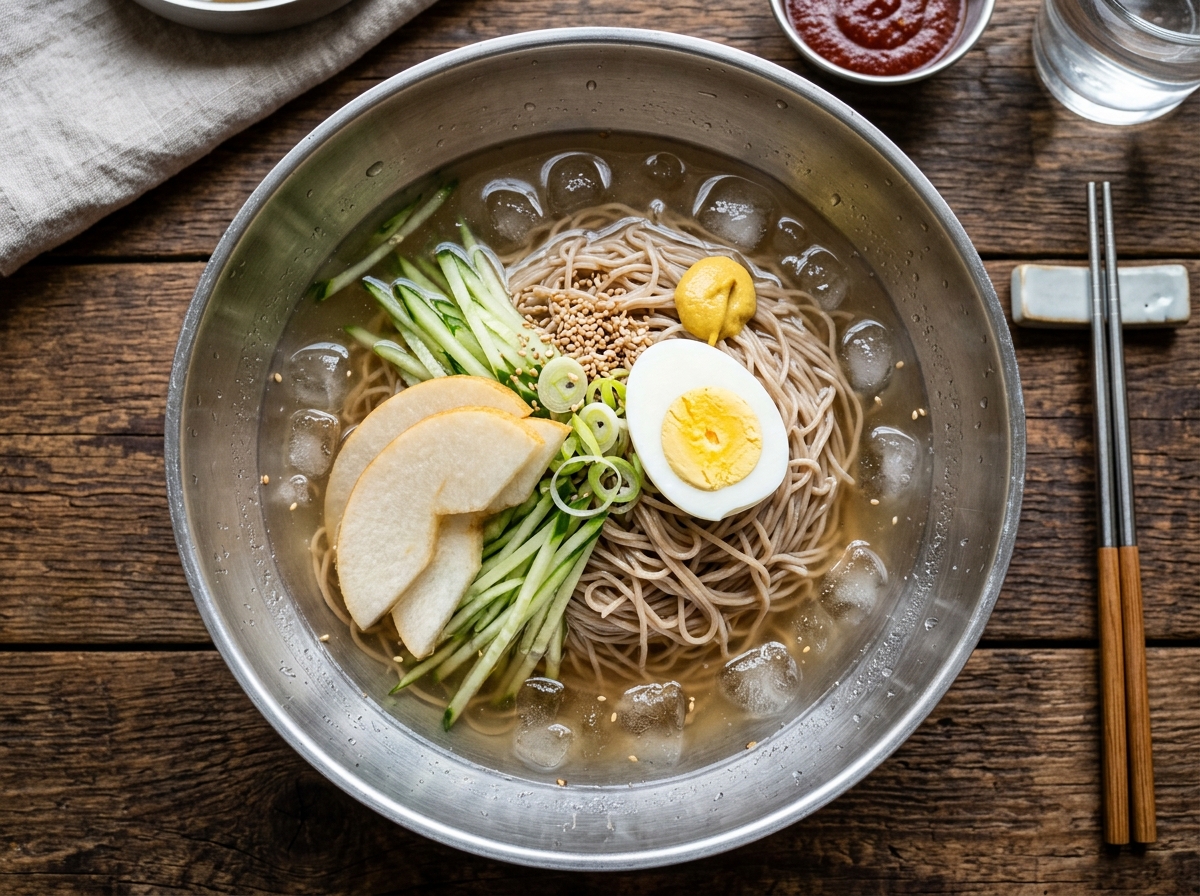
Divide the cold noodles among four large, deep bowls. Add 3-4 ice cubes to each bowl—yes, ice directly in the soup. This keeps everything shockingly cold from first bite to last. Ladle the chilled broth over the noodles until they’re submerged but still visible.
Top each bowl with sliced pear, cucumber, a few pieces of beef, and half a boiled egg. Add a small dollop (about 1/2 teaspoon) of Korean mustard paste on the side—diners can stir it in to taste, as it adds a sharp, sinus-clearing kick. Sprinkle with sesame seeds if using.
Serving Notes and Substitutions
Serve naengmyeon immediately with scissors at the table—Koreans traditionally snip the long noodles a few times before eating to make them more manageable. The contrast of icy broth, chewy noodles, crunchy vegetables, and creamy egg yolk is what makes this dish special.
Can’t find naengmyeon noodles? Japanese soba (100% buckwheat if possible) works in a pinch, though the texture will be slightly different—less chewy, more delicate. No Korean pear? Regular pear or even crisp apple works. Vegetarian option: Skip the beef and make the broth with dried shiitake mushrooms and kelp instead—simmer 5-6 dried shiitakes and a 4-inch piece of kelp in 6 cups water for 30 minutes, then season as directed.
Some people like to add a splash of the pickling liquid from dongchimi (water kimchi) to their broth for extra tang and complexity. If you have access to it, try stirring in 2-3 tablespoons per bowl. On especially hot days, many Koreans freeze their broth into ice cubes to add instead of regular ice, keeping the flavor undiluted as they melt.