Jjajangmyeon (Korean Black Bean Noodles) – From Scratch or Sauce
- Prep
20 minutes - Cook
25 minutes - Serves
2-3 servings - Difficulty
medium
Ingredients
- 400g fresh or dried jjajangmyeon noodles (or thick udon noodles)
- 200g pork belly or pork shoulder, cut into 1 cm cubes
- 1 medium onion, diced into 1 cm pieces
- 1 small zucchini, diced into 1 cm pieces
- 1 medium potato, peeled and diced into 1 cm pieces
- 4 tablespoons chunjang (Korean black bean paste)
- 3 tablespoons neutral cooking oil
- 1½ cups water or chicken stock
- 1 tablespoon sugar
- 1 tablespoon soy sauce
- 2 tablespoons cornstarch mixed with 3 tablespoons cold water
- 1 small cucumber, julienned (for garnish)
- Optional: 1 teaspoon grated ginger, 1 tablespoon rice wine
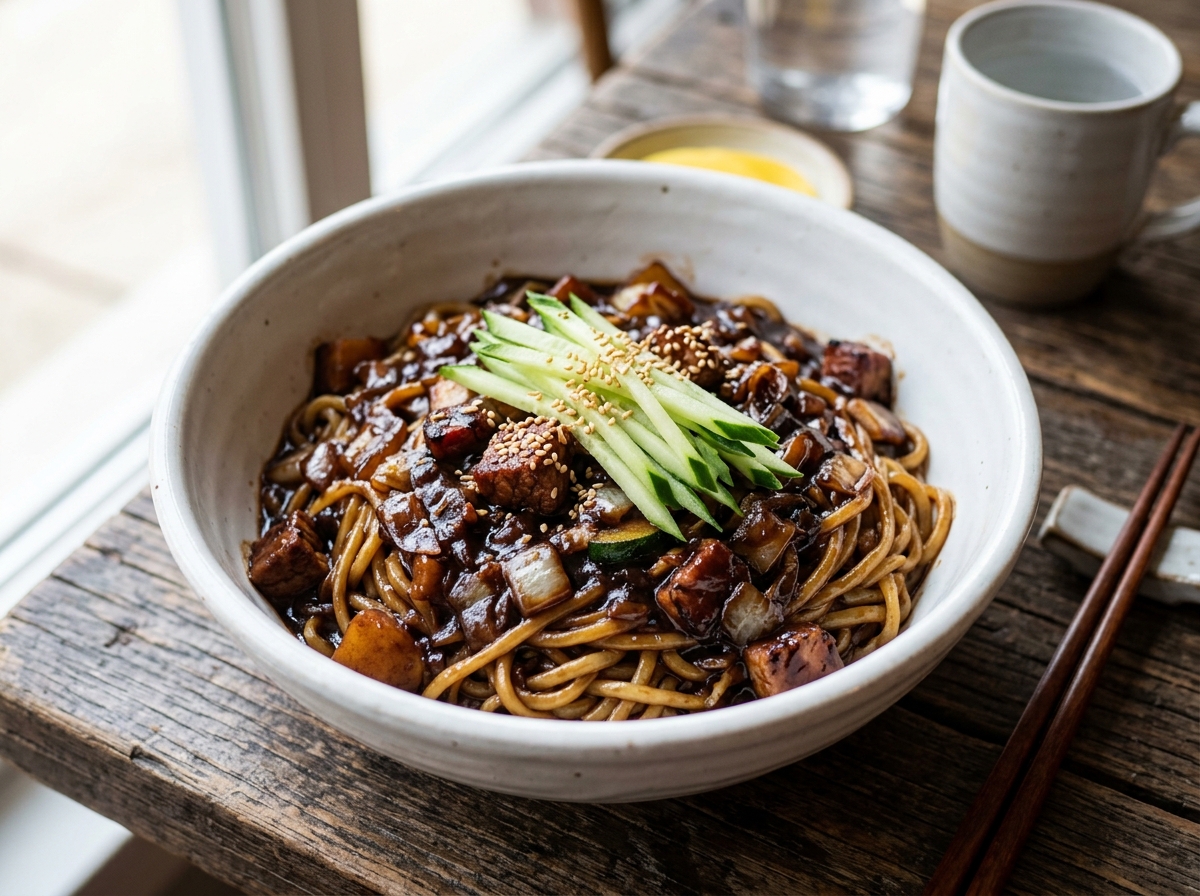
Jjajangmyeon is Korea’s favorite comfort noodle—a Chinese-Korean classic that every Korean has eaten dozens of times, usually delivered in metal bowls from the local Chinese restaurant. The thick wheat noodles are blanketed in a glossy, savory-sweet black bean sauce studded with pork and vegetables. Making it at home means you control the sweetness, the texture, and you get to eat it piping hot instead of lukewarm from delivery.
About Chunjang and Store-Bought Sauce
The soul of jjajangmyeon is chunjang (춘장), a salty-sweet fermented black soybean paste. It’s different from Chinese tianmian jiang—chunjang is caramelized and has a deeper, slightly sweeter flavor. You’ll find it in any Korean grocery, usually in small plastic tubs.
If you can’t find chunjang or want a quicker weeknight version, store-bought jjajang sauce (짜장 소스) exists in pouches or jars at Korean markets. These are pre-seasoned, ready-to-heat sauces that just need vegetables and protein added. They’re convenient and taste quite good—just sauté your pork and vegetables, add the pouch, thin with a little water, and simmer for 5-7 minutes. It’s a legitimate shortcut that many busy Korean home cooks use.
That said, making jjajangmyeon from scratch with raw chunjang gives you much more control and a fresher, cleaner taste. The method below walks you through the traditional from-scratch approach.
Preparing the Ingredients
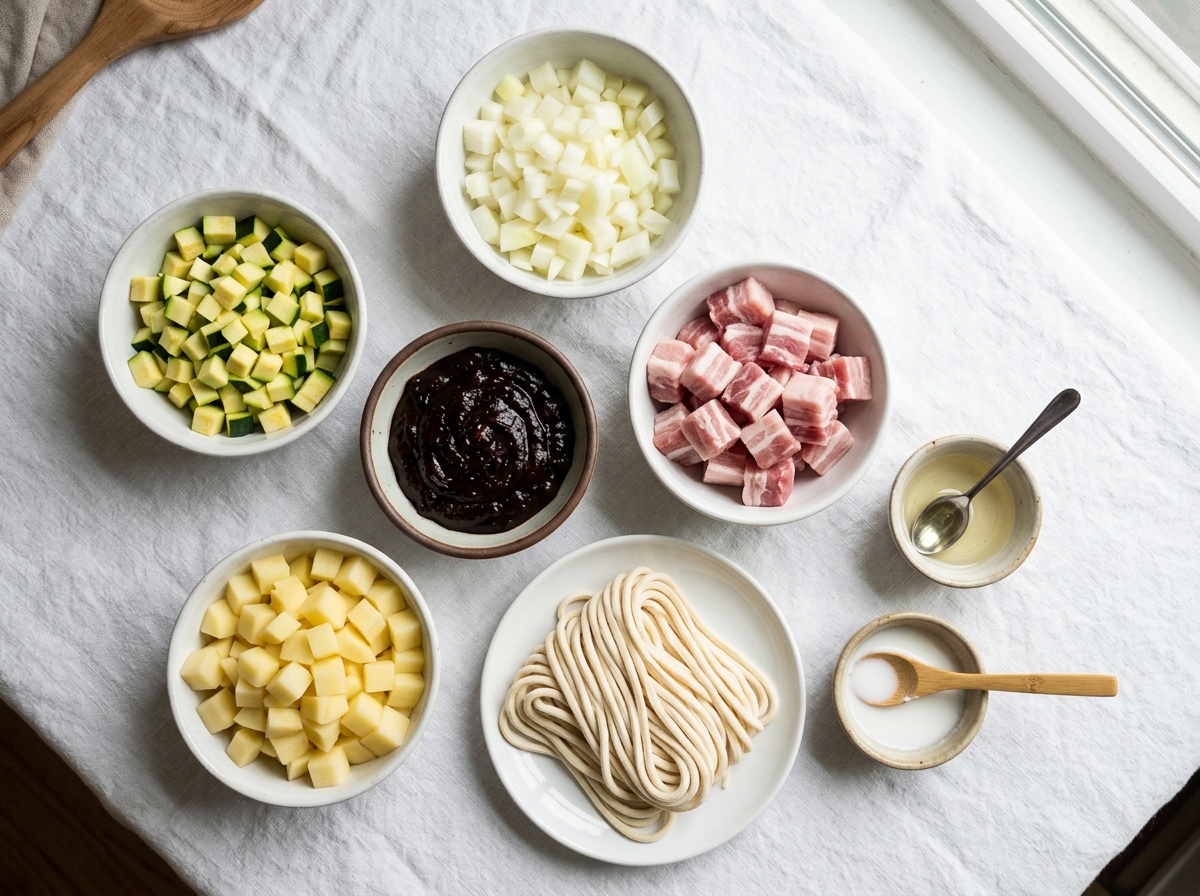
Uniform 1 cm dice on all your vegetables and pork is key—they should cook evenly and coat nicely with sauce. The potato adds body and a subtle sweetness; the zucchini and onion bring texture and moisture. If potato isn’t available, you can use more onion or add cabbage, but potato is traditional and helps thicken the sauce naturally.
Soak the diced potato in cold water for a few minutes to remove excess starch, then drain and pat dry. This prevents it from turning mushy or making the sauce gummy.
Frying the Chunjang
Heat a wok or large skillet over medium heat and add the cooking oil. Once shimmering, add the raw chunjang paste. Fry the chunjang for 2-3 minutes, stirring constantly, until it darkens slightly, becomes fragrant, and the raw, salty edge mellows into something richer and almost chocolatey. This step is crucial—raw chunjang tastes harsh and salty; fried chunjang is the foundation of great jjajangmyeon.
💡 Tip: Don’t rush this step or let the chunjang burn. Medium heat and constant stirring are your friends. If it starts to smoke or smell acrid, lower the heat immediately.
Push the fried chunjang to the side of the wok or transfer it briefly to a small bowl.
Cooking the Pork and Vegetables
In the same wok, add the diced pork. Stir-fry over medium-high heat for 3-4 minutes until the pork is mostly cooked and lightly browned. Add the onion and potato, and stir-fry for another 3 minutes until the onion softens and the potato edges start to turn translucent.
Add the zucchini and stir-fry for 1 minute. Zucchini cooks fast and releases water, so you want it just barely softened, not mushy.
Building the Sauce
Return the fried chunjang to the wok and stir everything together so the vegetables and pork are coated in the dark paste. Add the water (or stock), sugar, and soy sauce. If using ginger or rice wine, add them now. Stir well and bring to a gentle boil, then reduce to a simmer.
Let the sauce simmer for 8-10 minutes, stirring occasionally, until the potato is fully tender and the sauce has thickened slightly. Taste and adjust: if it’s too salty, add a splash more water and a pinch of sugar; if it’s too bland, add a bit more soy sauce.
Thickening with Cornstarch Slurry
Give your cornstarch slurry a good stir (the starch settles), then pour it into the simmering sauce while stirring constantly. The sauce will thicken and turn glossy within 30 seconds to 1 minute. You want a coating consistency—thick enough to cling to the noodles but still pourable. If it’s too thick, add a few tablespoons of water; if too thin, simmer uncovered for another minute or two.
Turn off the heat. The sauce will continue to thicken slightly as it sits.
Cooking the Noodles
While the sauce simmers, bring a large pot of water to a rolling boil (no need to salt it heavily—jjajangmyeon noodles are wheat noodles and the sauce is already seasoned). Cook the noodles according to package directions, usually 4-5 minutes for fresh, 6-8 minutes for dried, until chewy but tender. Fresh jjajangmyeon noodles are thicker and chewier than ramen; if you can only find udon, they’re a decent substitute.
Drain the noodles well and rinse briefly under cold running water to stop the cooking and remove excess starch. Shake off the water thoroughly—you want the noodles dry so the sauce clings.
Serving and Variations
Divide the noodles among bowls and ladle the hot black bean sauce generously over the top. Garnish with julienned cucumber for a refreshing crunch and a splash of color. Serve with a small dish of danmuji (yellow pickled radish) and raw onion slices on the side, plus a bottle of vinegar and a dish of mustard if you like—these are the classic Korean-Chinese jjajangmyeon condiments.
If using store-bought jjajang sauce: Skip the chunjang frying step entirely. Sauté your pork and vegetables as described, then add the entire pouch of sauce and about ½ cup water. Simmer for 5-7 minutes until everything is tender, and thicken with a tablespoon of cornstarch slurry if needed (many store sauces are already thickened).
Vegetarian version: Omit the pork and double the vegetables—add mushrooms, cabbage, or carrot. Use vegetable stock instead of chicken stock.
Leftover sauce keeps in the fridge for 3-4 days and reheats beautifully with a splash of water. Jjajangmyeon is meant to be hearty, a little messy, and deeply satisfying—dig in with gusto.