Gyeranmari (Korean Rolled Omelette) – Perfect Dosirak Banchan
- Prep
10 minutes - Cook
8 minutes - Serves
2-3 servings - Difficulty
medium
Ingredients
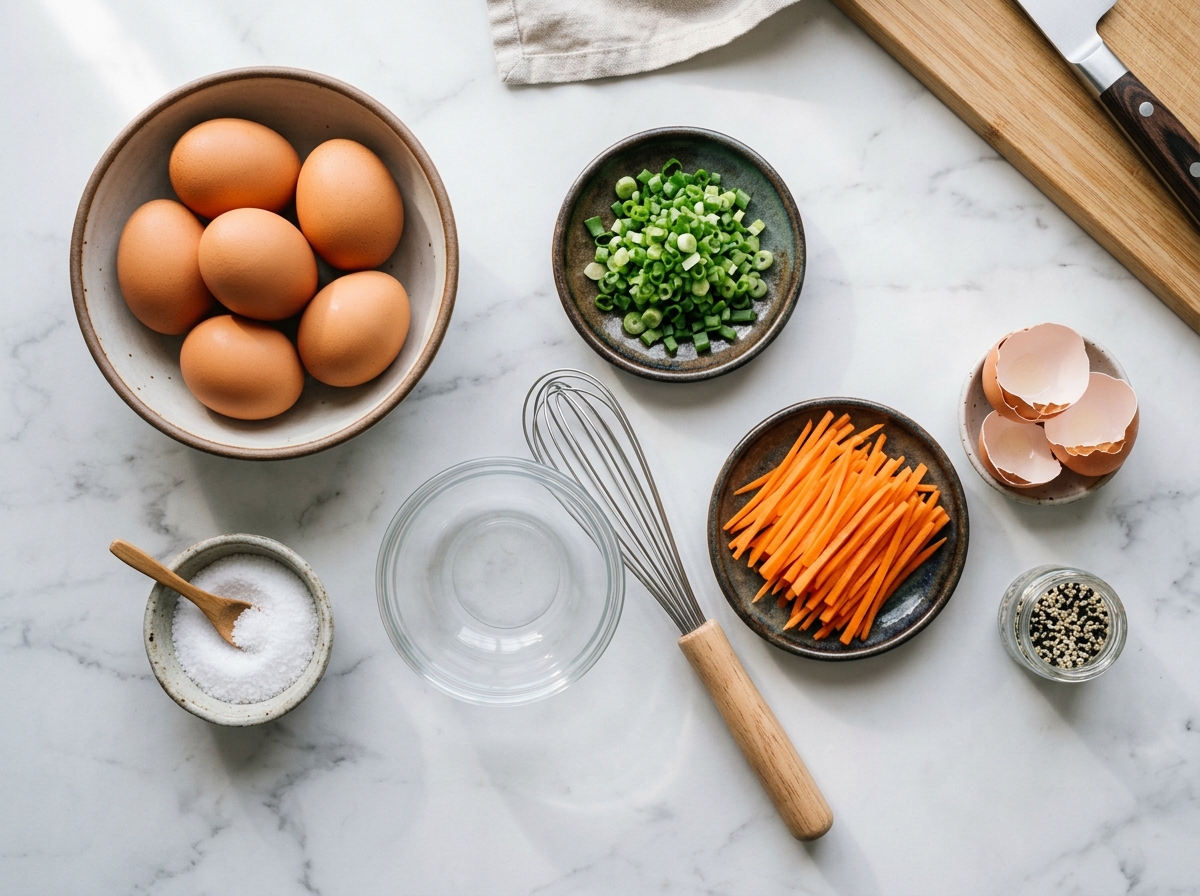
- 4 large eggs
- 2 scallions (green onions), finely chopped
- ¼ small carrot, julienned into thin matchsticks
- ¼ teaspoon salt
- 1 tablespoon water or milk
- 1 tablespoon neutral oil (vegetable or canola), divided
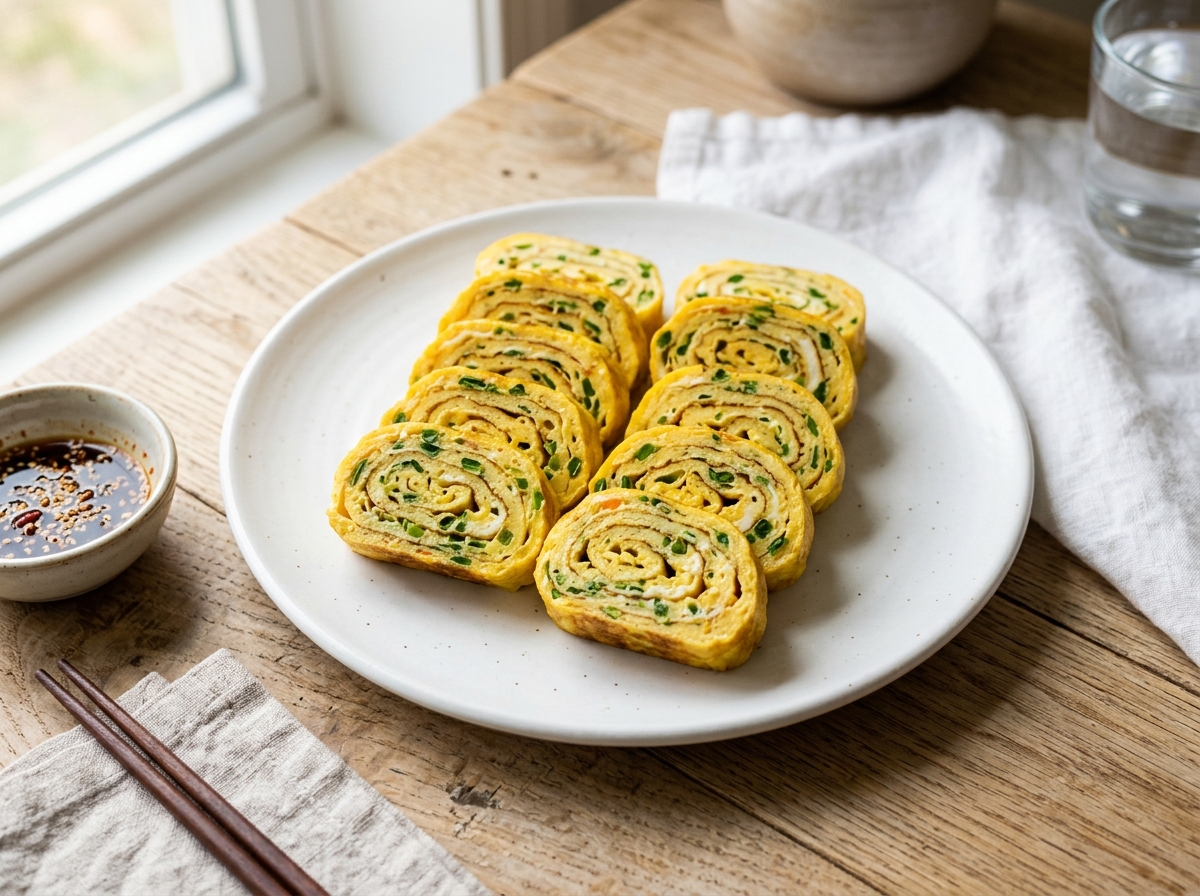
Gyeranmari is the fluffy, savory rolled omelette that shows up in nearly every Korean dosirak (lunchbox). It’s simple, colorful, and packs beautifully for picnics, school lunches, or a quick banchan at home. The key is a gentle hand and knowing when to roll—too early and it tears, too late and it won’t stick. Once you nail the timing, you’ll make this on repeat.
Prepare the Egg Mixture
Crack the eggs into a medium bowl and add the salt and water (or milk—it makes the eggs slightly fluffier and more tender). Beat gently with chopsticks or a fork until the yolks and whites are just combined, but don’t overbeat; you want a cohesive mixture, not frothy. Stir in the chopped scallions and julienned carrot. The vegetables should be cut small and thin so they distribute evenly and don’t tear the omelette when you roll.
💡 Tip: Strain the egg mixture through a fine-mesh sieve if you want an ultra-smooth, restaurant-style finish, but it’s not necessary for home cooking.
Heat the Pan and Add the First Layer
Use a small nonstick or well-seasoned pan, ideally 8–9 inches square or round. Heat it over medium-low heat and add about ½ tablespoon of oil, swirling to coat the bottom evenly. Pour in roughly one-third of the egg mixture, tilting the pan so it spreads into a thin, even layer. Let it cook undisturbed for about 45–60 seconds, until the bottom is just set but the top is still slightly wet and glossy—not fully cooked through.
Roll the First Layer
Starting from one edge of the pan (the edge closest to you works best), use a silicone spatula or chopsticks to gently lift and roll the omelette toward the opposite side, creating a tight cylinder. Don’t worry if your first roll isn’t perfect; it gets easier with each layer. Push the rolled omelette to the far edge of the pan, leaving the near side empty.
Add and Roll the Second Layer
Add another ½ teaspoon of oil to the empty part of the pan, tilting to coat. Lift the rolled omelette slightly with your spatula so the new oil can flow underneath it—this helps the layers stick together. Pour in half of the remaining egg mixture, again tilting so it spreads under and around the existing roll. Cook for 45–60 seconds until the bottom sets but the top is still moist, then roll the omelette from the far edge (where your first roll sits) back toward you, wrapping the new layer around the outside. Push it back to the starting edge.
Add the Final Layer and Finish Rolling
Repeat the process one more time: oil the pan, lift the roll, pour in the last of the egg mixture, wait until just set, then roll from the edge with the omelette toward the empty side. You should now have a plump, multi-layered cylinder. Let it cook for another 30 seconds, rolling it gently back and forth to firm up all sides and seal the seam. The outside should be golden and lightly set, but still tender—not browned or crispy.
Shape and Slice
Transfer the gyeranmari to a cutting board. While it’s still warm, you can gently press and shape it with the spatula or a bamboo mat (like a sushi mat) to make it more uniform and rectangular—this is especially nice for dosirak presentation. Let it cool for 2–3 minutes so the layers set and the roll holds its shape when sliced. Cut crosswise into ½- to ¾-inch pinwheel slices with a sharp knife, wiping the blade between cuts for clean edges.
Serving and Substitutions
Gyeranmari is delicious warm or at room temperature, which is why it’s a dosirak staple—it travels well and tastes great hours later. Serve it as a banchan alongside rice and other sides, tuck it into a lunchbox with some kimchi and japchae, or even eat it as a light snack with a dab of ketchup (a common Korean kids’ favorite).
Substitutions: If you can’t find Korean scallions, regular green onions work perfectly. Swap the carrot for finely chopped red bell pepper, onion, or even a little bit of chopped kimchi (squeeze out excess moisture first). Some cooks add a pinch of sugar or a few drops of sesame oil to the egg mixture for extra flavor. If you don’t have a square pan, a round nonstick skillet works fine—you’ll just trim the edges or embrace a round roll.