Eomuk Guk (Korean Fish Cake Soup) – Street Food Comfort at Home
- Prep
10 minutes - Cook
25 minutes - Serves
2-3 servings - Difficulty
easy
Ingredients
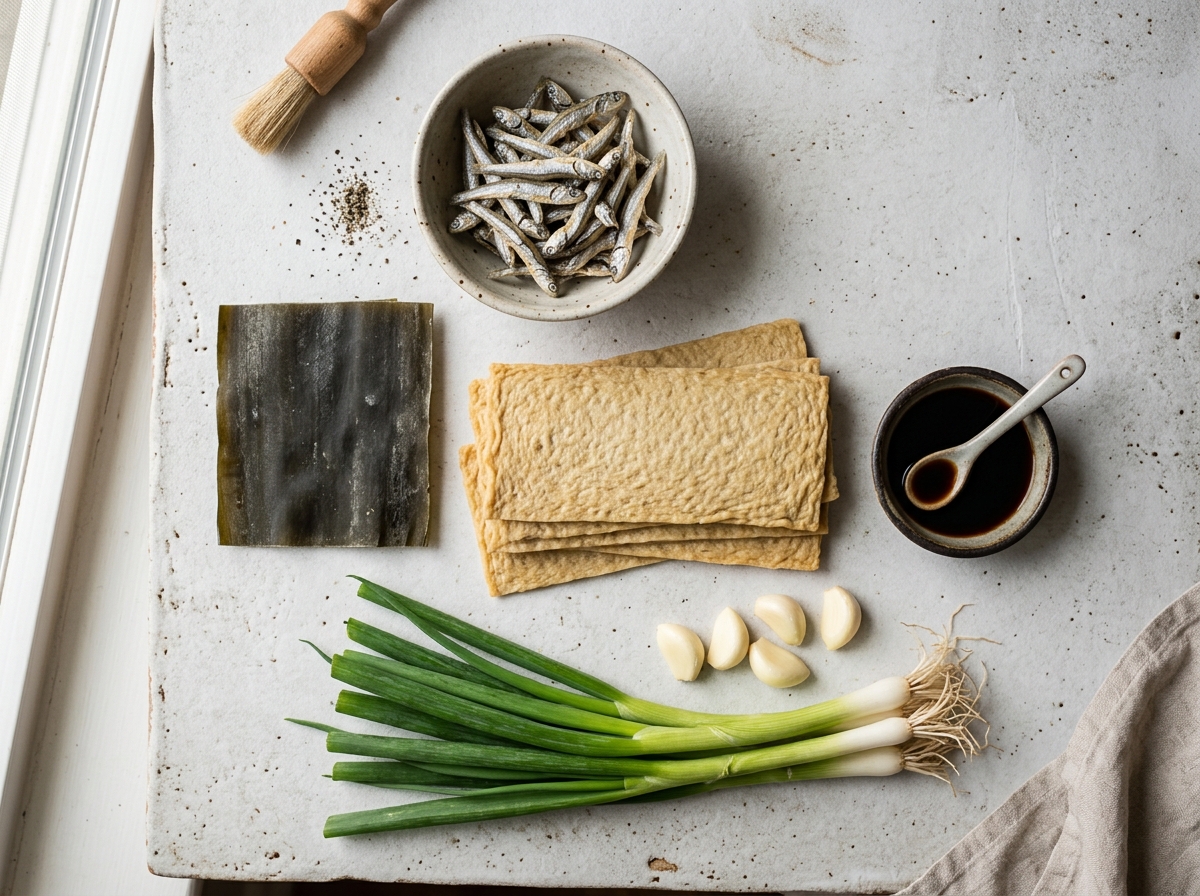
- 200-250g (7-9 oz) eomuk/odeng (Korean fish cakes), preferably flat sheets
- 6 cups water
- 15-20g (about 1/2 cup loosely packed) dried anchovies, heads and guts removed
- 1 piece dried kelp (dasima/kombu), about 4x4 inches
- 2-3 cloves garlic, smashed
- 2 green onions, cut into 2-inch lengths
- 2 tablespoons soup soy sauce (guk ganjang), plus more to taste
- 1 teaspoon sesame oil
- Salt to taste
- Optional: 1-2 tteok (rice cakes), 1 small carrot (sliced), dried red chili pepper for heat
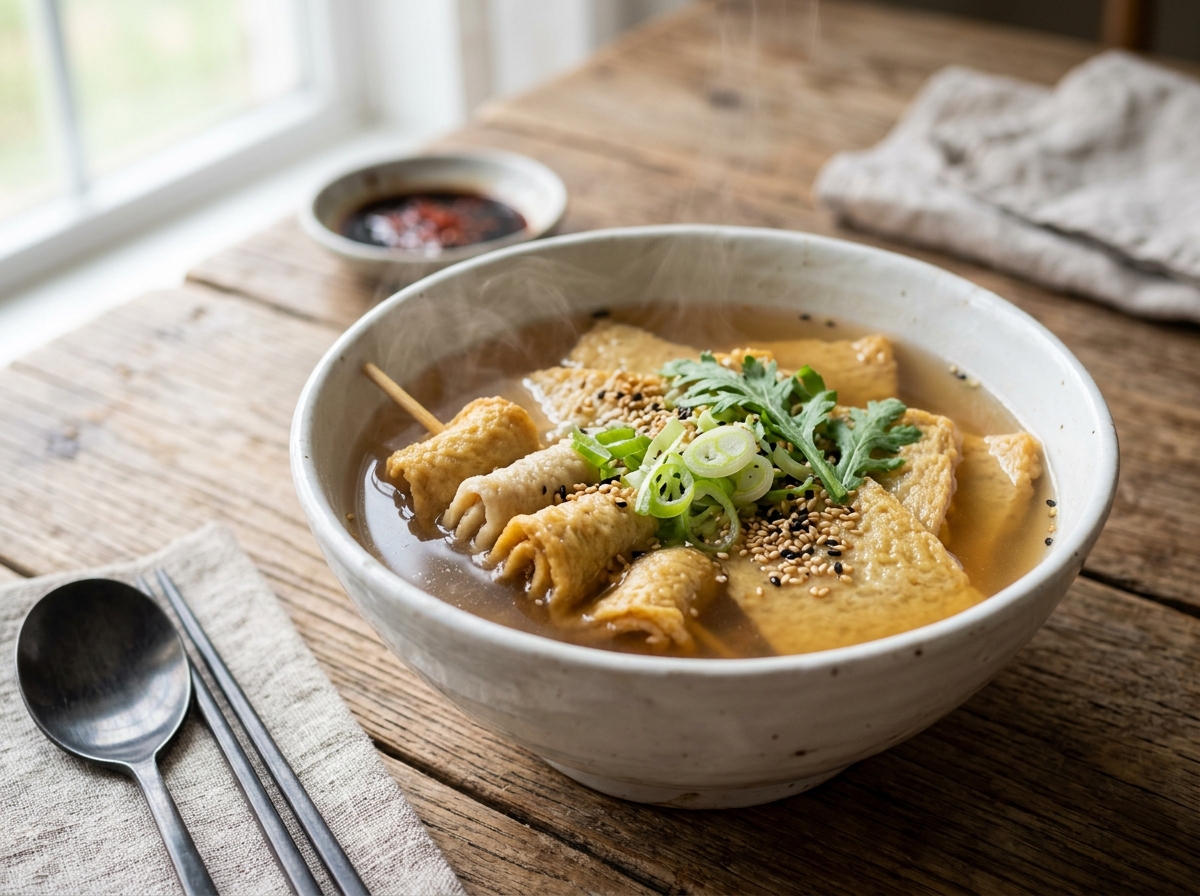
This is the soup that keeps Seoul warm on cold afternoons—served piping hot from street carts, often with fish cakes threaded on wooden skewers. The magic is in the simplicity: a clean, savory anchovy-kelp broth that lets the chewy fish cakes shine. You don’t need a long-simmered stock here; the broth comes together in about 15 minutes and tastes like the real 길거리 (street-food) deal.
Make the Broth (Yuksu)
Start with your anchovy-kelp base, which is the backbone of countless Korean soups. Add the water, cleaned dried anchovies, kelp, and smashed garlic to a pot and bring to a boil over medium-high heat. Once it’s boiling, lower the heat to medium-low and simmer for 12-15 minutes. You’ll see the water turn a light amber and smell that deep, oceanic umami.
Remove and discard the anchovies and kelp. If you leave them in too long, the broth can turn bitter or slimy. This step is fast and forgiving—if you forget the kelp for an extra couple of minutes, it’s not the end of the world, but don’t let the anchovies go much longer than 15.
💡 Tip: If you can’t find dried anchovies, substitute with 1 tablespoon of anchovy sauce (myeolchi aekjeot) or even a good-quality dashi powder. The broth won’t have quite the same depth, but it’ll still be tasty.
Prepare the Fish Cakes
While the broth simmers, rinse your fish cakes briefly under warm water to wash off any excess oil from packaging. Korean fish cakes (eomuk) come in many shapes—sheets, tubes, balls—but the flat rectangular sheets are most traditional for this soup. Slice them into bite-sized strips or triangles, about 2 inches wide.
If you picked up frozen fish cakes, thaw them first. Fresh or refrigerated is always better for texture, but frozen works in a pinch.
Simmer the Fish Cakes
Add the sliced fish cakes to your finished broth and bring it back to a gentle simmer for 5-7 minutes. The fish cakes will puff up slightly and soak in all that savory broth. This is when the soup starts smelling like a Seoul street corner in winter.
Stir in the soup soy sauce (guk ganjang, the lighter-colored soy sauce used for soups—regular soy sauce is too dark and strong here). Taste and adjust: you want a balanced, slightly salty broth that’s savory but not overwhelming. Add a pinch of salt if needed.
Finish and Serve
Toss in the green onion pieces and let them wilt for about 1 minute. Turn off the heat and drizzle in the sesame oil—this adds a nutty aroma that ties the whole bowl together.
Ladle into bowls while it’s hot. The broth should be clear, light amber, and fragrant. The fish cakes will be tender and chewy, almost spongy, with that signature bounce.
Serving and Variations
Serve this on its own as a light meal or alongside kimbap, tteokbokki, or fried snacks for a full 분식 (bunsik, casual Korean snack-food) spread. In Korea, street vendors often add a boiled egg, a few slices of radish, or even instant ramen noodles to make it more filling.
If soup soy sauce is hard to find, use regular soy sauce but cut the amount in half and add more salt to taste—the goal is seasoning without darkening the broth. No kelp? Skip it and add an extra 5-10 anchovies; you’ll lose a bit of sweetness but the broth will still be good.
Leftovers keep well in the fridge for 2-3 days. The fish cakes will absorb more broth as they sit, so you may want to add a splash of water when reheating.