How to Navigate a Korean Traditional Market Like a Local
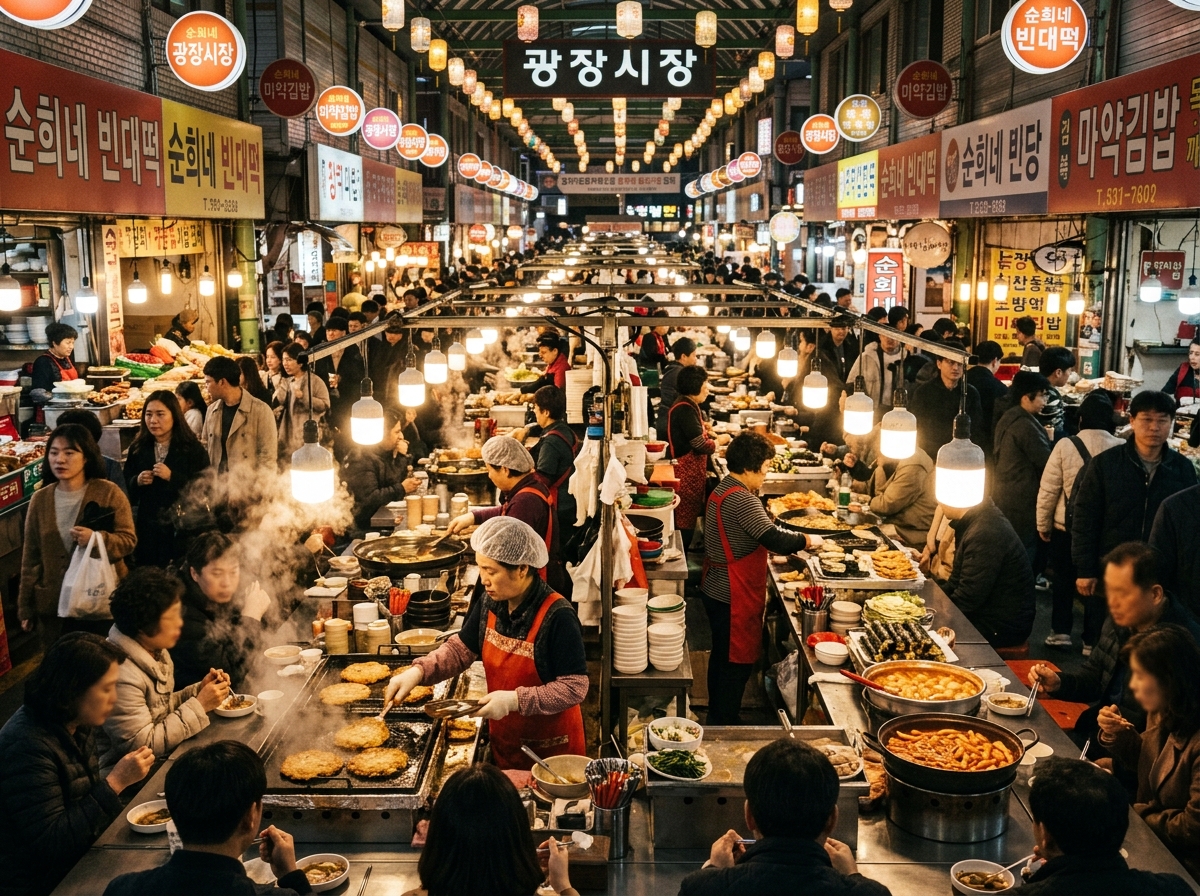
Stepping into a Korean traditional market for the first time can feel overwhelming—loud vendors, unfamiliar foods, bustling crowds, and zero English signage. But these centuries-old markets like Gwangjang in Seoul are where locals still shop and eat daily, offering some of the best food experiences and cultural immersion you’ll find in Korea. This guide will help you navigate with confidence, from ordering etiquette to payment methods and what to actually eat.
Understanding the Layout and Atmosphere
Traditional markets (jaeraesijang) are divided into distinct sections, usually with prepared food stalls clustered together in one area and dry goods, fabric, and groceries in others.
At Gwangjang Market, the famous food alley runs down the center with narrow aisles and communal seating. Vendors call out to passersby, often in Korean, but don’t feel pressured—they’re just being friendly and competitive for business.
Most markets open early (around 8-9 AM) and stay lively until evening, though peak eating times are lunch (12-2 PM) and early dinner (5-7 PM). Visiting mid-morning or mid-afternoon means shorter waits and more relaxed vendors who have time to help you.
How Ordering Works at Food Stalls
Unlike restaurants, market stalls don’t have menus in English, and many don’t have menus at all—the food is displayed right in front of you.
The standard process:
- Find an empty stool at a stall that looks busy (crowded = fresh and good)
- Sit down and the vendor will approach or make eye contact
- Point to what you want or say the dish name
- Hold up fingers to show quantity
- Food arrives within minutes; eat at the counter
- Pay when you’re finished, before you leave
Vendors expect you to order at least one item per person if you’re taking a seat. Sharing is totally normal, but don’t sit down just to watch—stools are limited and turnover matters.
💡 Tip: If a vendor sees you looking confused, they’ll often gesture to popular items or bring out a sample. Don’t be afraid to point and ask “이거요?” (i-geo-yo, “this one?”).
Payment Etiquette and Cash Culture
Most traditional market stalls are cash-only, especially the smaller food vendors. Larger shops selling goods may accept cards, but don’t count on it.
Bring small bills (₩10,000 and ₩5,000 notes) because many vendors don’t keep much change on hand. ATMs are usually available near market entrances or at convenience stores nearby.
When paying, place cash on the counter or hand it respectfully with both hands (a small cultural courtesy). Vendors will often set your change on the counter rather than handing it directly to you—this is normal, not rude.
What to Eat: The Essential Market Foods
Korean markets have a different food culture than restaurants—think quick, street-style dishes that have been perfected over decades by the same families.
| Dish | What It Is | Typical Price Range |
|---|---|---|
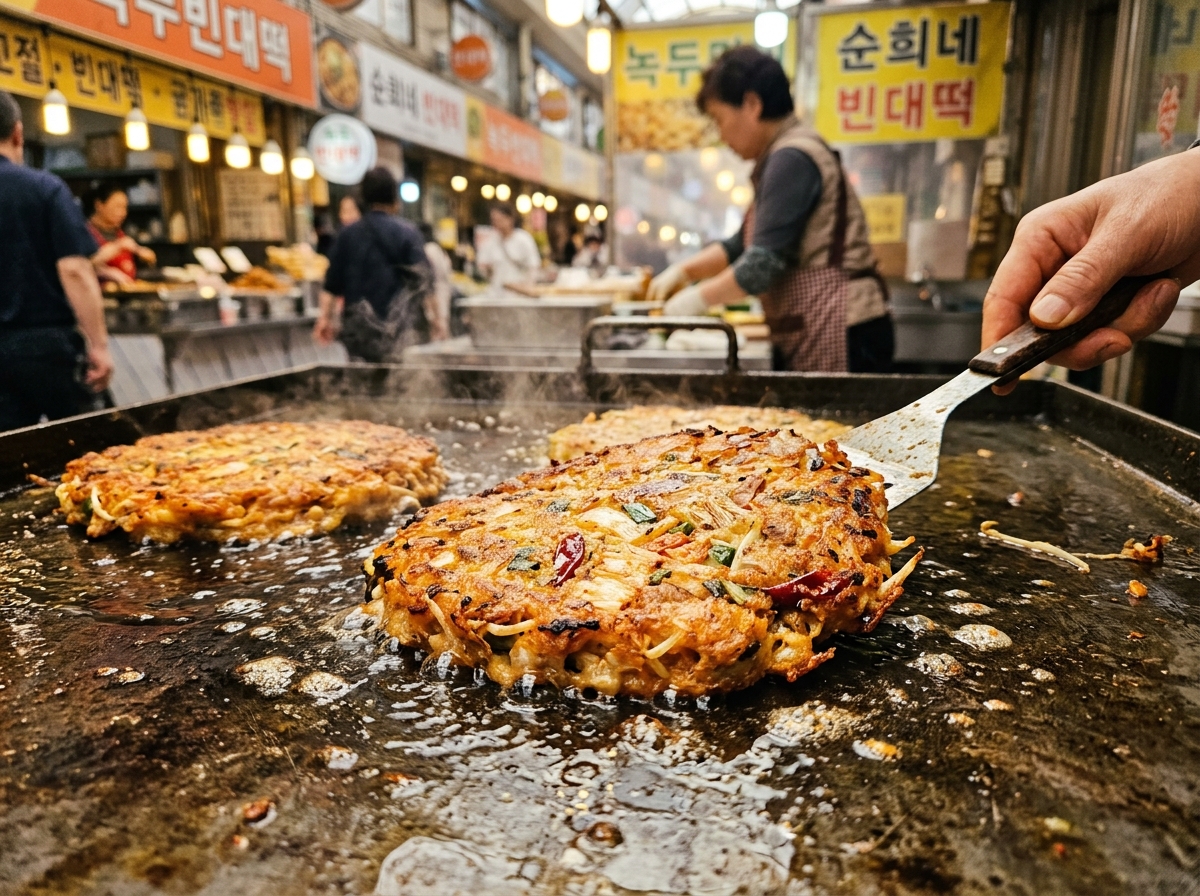
| Bindaetteok | Crispy mung bean pancake, savory and hearty | ₩5,000–₩7,000 |
| Mayak gimbap | “Drug” kimbap—tiny, addictive rice rolls with sesame oil | ₩3,000–₩4,000/10 pcs |
| Yukhoe | Raw beef with pear, egg yolk, sesame (Gwangjang specialty) | ₩15,000–₩20,000 |
| Tteokbokki | Chewy rice cakes in sweet-spicy sauce | ₩3,000–₩5,000 |
| Sundae | Blood sausage with noodles and organs (milder than it sounds) | ₩5,000–₩8,000 |
| Pajeon | Green onion pancake, crispy and oily | ₩8,000–₩12,000 |
Order bindaetteok and mayak gimbap if you’re new to Korean food—they’re crowd-pleasers. Adventurous eaters should try yukhoe (make sure the stall looks clean and busy) or sundae with a shot of makgeolli (milky rice wine).
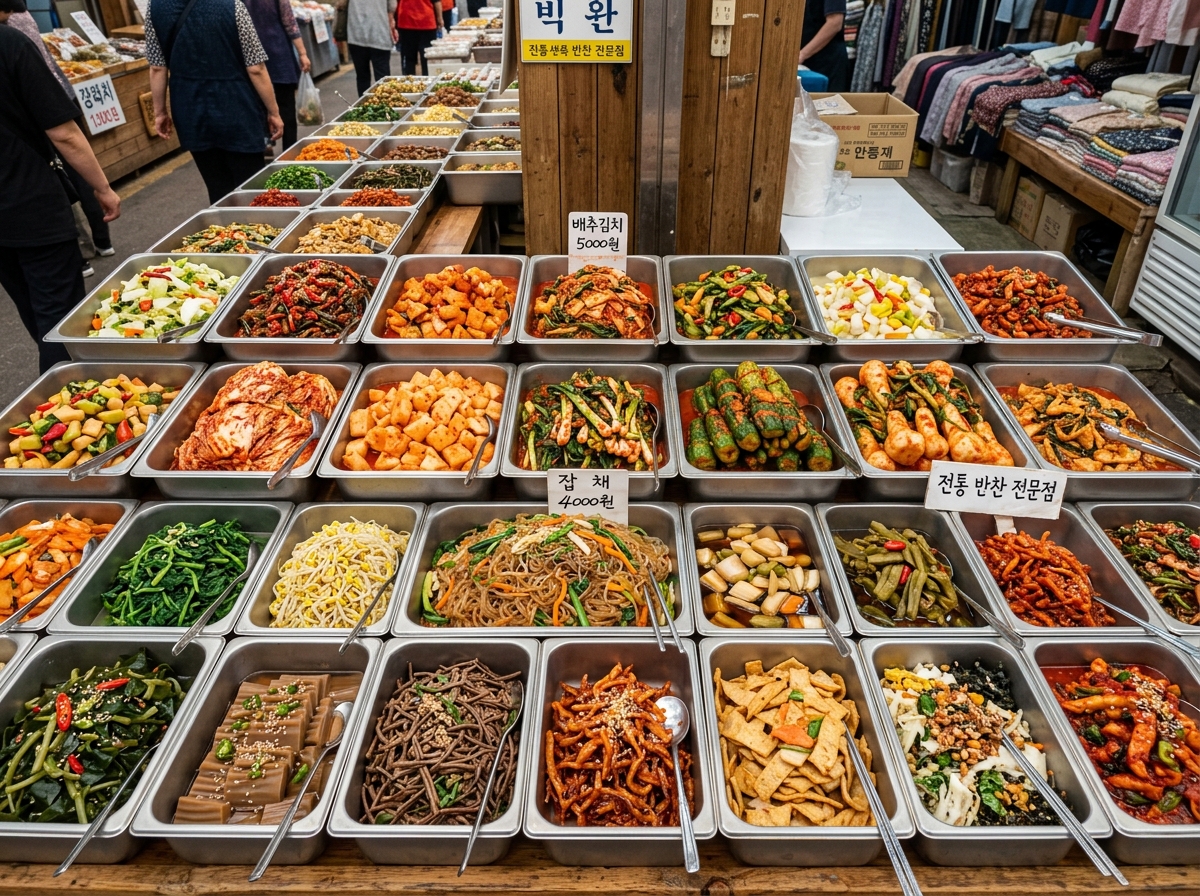
Don’t skip the banchan (side dishes) that come free with most orders—pickled radish, kimchi, and peppers add balance and are endlessly refillable.
Communicating with Minimal Korean
You can navigate entirely with gestures and a few key phrases:
- “이거 주세요” (i-geo ju-se-yo) – “This one, please” (point while saying it)
- “얼마예요?” (eol-ma-ye-yo) – “How much?”
- “맛있어요!” (ma-si-sseo-yo) – “It’s delicious!” (vendors love this)
- “감사합니다” (gam-sa-ham-ni-da) – “Thank you”
Most vendors are used to tourists and will understand pointing, nodding, and finger-counting. Smile, be patient, and don’t stress about perfect communication.
If you’re unsure what something is, take a photo and use a translation app, or simply ask “뭐예요?” (mwo-ye-yo, “what is it?”)—they’ll often mime or show you the ingredients.
Shopping for Goods Beyond Food
Markets like Gwangjang also sell fabric, hanbok materials, kitchenware, and dried goods. Bargaining is less common than it used to be, but politely asking “깎아 주세요?” (kka-kka ju-se-yo, “discount please?”) might work when buying multiple items or bulk goods.
Prices for fabric and hanbok materials can be significantly cheaper than retail shops, especially if you’re sourcing materials for a project. Just know that these vendors expect you to know what you’re looking for—browsing is fine, but they won’t hand-hold beginners.
Safety, Cleanliness, and Common Concerns
Korean markets are very safe. Petty theft is rare, but keep your bag zipped in crowds.
Food hygiene standards are generally high—vendors handle large volumes daily and locals eat here constantly. Stick to busy stalls where food turns over quickly. If you have a sensitive stomach, avoid raw dishes like yukhoe or choose fully cooked options.
Seating is tight and communal. You’ll likely share elbow space with strangers; it’s all part of the experience. Don’t leave belongings on the counter unattended.
Making the Most of Your Visit
Arrive a little hungry but not starving—you’ll want to try multiple small dishes rather than filling up at the first stall. Budget around ₩15,000–₩25,000 per person for a solid tasting experience.
Go with a friend or two so you can order different dishes and share. Solo eating is totally fine, but variety is the real joy of market hopping.
Finally, take your time. Walk the full length of the market before committing to a stall, watch what locals are ordering, and trust your instincts. The best bites often come from the least flashy spots with the longest lines of older Korean customers.
Traditional markets aren’t just tourist attractions—they’re living, working pieces of Korean daily life. With a little confidence and curiosity, you’ll leave full, fascinated, and already planning your next visit.