Common Korean Honorifics Explained Simply: What -ssi, Oppa, and More Mean
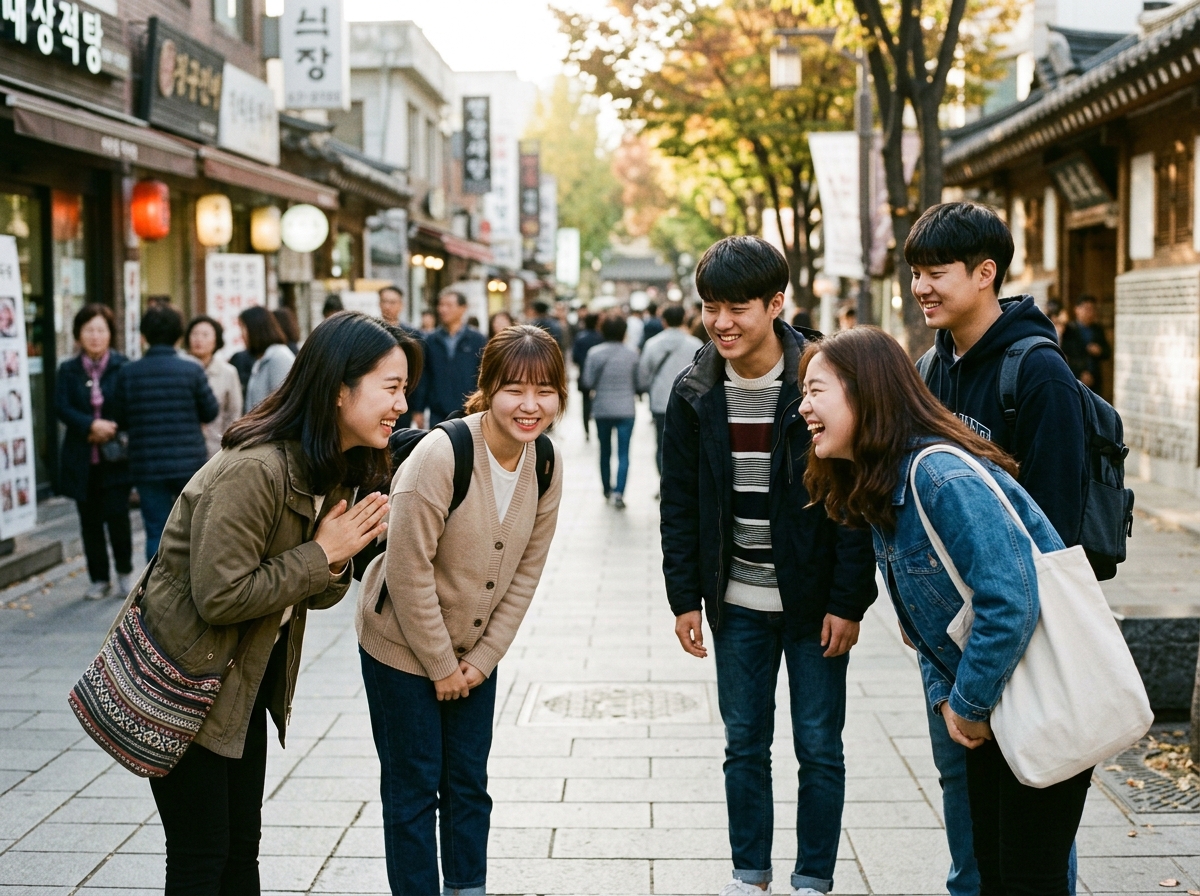
If you’ve ever watched a K-drama or listened to K-pop, you’ve probably noticed Koreans don’t just use names. There’s always something tacked on—oppa, unnie, -nim, -ssi—and it can feel like you need a decoder ring. The good news? Korean honorifics follow pretty clear patterns once you understand the system. This guide breaks down the most common titles you’ll actually hear, who uses them, and when, so you can finally understand what’s going on in those subtitles.
Why Honorifics Matter in Korean
Korean is a hierarchical language. Age, social status, and relationship all determine how you address someone. Using the wrong term—or worse, none at all—can come across as rude or overly familiar.
In English, we mostly get by with first names or “Mr./Ms.” Korean has a much wider toolkit. The honorific you choose signals respect, affection, and your place in the social pecking order. It’s not just polite—it’s how relationships are defined.
The Universal Go-To: -ssi (씨)
-ssi is the safest, most neutral honorific. Attach it to someone’s full name or given name when you want to be polite but not overly formal.
You’ll hear it constantly in offices, news broadcasts, and everyday interactions. Think of it as the Korean equivalent of “Mr.” or “Ms.,” but slightly warmer. For example, if someone’s name is Kim Minji, you’d say “Kim Minji-ssi” or just “Minji-ssi.”
A few rules:
- Never use -ssi with someone much older or higher in status—it’s too casual.
- Don’t use it with your own name (that’s like calling yourself “Mr. Me”).
- It works for acquaintances, colleagues at your level, or people you’ve just met.

Family-Style Honorifics: Oppa, Unnie, Hyung, Noona
These four are everywhere in Korean pop culture, and they originally come from family terms for older siblings. But Koreans also use them for close friends, romantic partners, and even older acquaintances in casual settings.
Here’s the breakdown by speaker gender:
| You are | Talking to older male | Talking to older female |
|---|---|---|
| Female | Oppa (오빠) | Unnie (언니) |
| Male | Hyung (형) | Noona (누나) |
These terms only work if the age gap is relatively small—usually within about 10 years—and if you have a friendly, informal relationship. A 25-year-old woman would call her 28-year-old male friend “oppa,” but she wouldn’t use it for a 50-year-old man.
In romantic relationships, “oppa” and “noona” also carry a flirty, affectionate vibe. That’s why you hear them so often in K-dramas.
Workplace and School Titles: Sunbae and Hoobae
Sunbae (선배) means senior—someone who entered your school, company, or organization before you. Hoobae (후배) is the opposite: a junior who came after you.
You’ll use “sunbae” constantly in Korean workplaces and universities. It’s not about age; it’s about seniority in that specific context. A 30-year-old new hire would call a 25-year-old who joined two years earlier “sunbae.”
Koreans rarely say “hoobae” directly to someone’s face. Instead, you’d just use their name with -ssi or another appropriate honorific. But you’ll hear it used when talking about juniors (“he’s my hoobae from college”).
💡 Tip: If you’re ever unsure, “sunbae” is a safe bet for anyone who seems more experienced than you in a work or school setting.
The Formal Heavyweight: -nim (님)
-nim is the most respectful suffix you’ll encounter in everyday life. It’s used for customers, clients, high-status individuals, or anyone you want to show serious respect.
You’ll hear it attached to job titles or roles:
- Seonsaeng-nim (선생님) = teacher (literally “teacher-nim”)
- Sajang-nim (사장님) = company president or boss
- Gisa-nim (기사님) = driver (used politely for taxi/bus drivers)
- Son-nim (손님) = customer or guest
In customer service, you’ll be called “son-nim” constantly—it’s the standard way Korean staff address customers. If you’re ordering food or shopping, you’re automatically “guest-nim.”
When to Just Use a Name (Carefully)
Calling someone by their name alone—without any honorific—is reserved for very specific situations:
- Parents talking to children
- Speaking to someone younger than you in a close, informal relationship
- Very close friends of the same age who’ve agreed to drop honorifics
If you’re a foreigner, Koreans will usually give you some leeway. But if you want to show respect and avoid awkwardness, always add something—even just -ssi.
A Few More You Might Hear
- -ya / -ah (야 / 아): Casual name endings for people younger or same age, very close friends only. “-ah” follows names ending in a consonant; “-ya” follows vowels.
- Imo (이모): Literally “aunt,” but also used for middle-aged women working in restaurants or shops (like calling someone “auntie” affectionately).
- Ajussi / Ajumma (아저씨 / 아줌마): Middle-aged or older man/woman. Useful but can feel a bit blunt—use with care.
The Bottom Line
Korean honorifics aren’t as complicated as they first appear. Most of the time, you’ll rely on -ssi for general politeness, sunbae in professional or school settings, and oppa/unnie/hyung/noona with close friends or romantic partners.
The key is paying attention to context: age, relationship, and setting. When in doubt, err on the side of formality—Koreans appreciate the effort, even if you don’t get it perfect. And if you’re learning Korean or planning a trip, getting comfortable with these terms will make conversations feel a lot less foreign.